Redefining Product Integrity Through Cryptographic Hardware and Immutable Ledgers
A CISO-level briefing on why legacy authentication fails and how Cifr's secure elements plus Solana-ledger provenance create tamper-proof, interactive products.
Cifr Team · · 4 min read
The Cifr Architecture: Redefining Product Integrity Through Cryptographic Hardware and Immutable Ledgers
1. The Crisis of Authenticity in the Global Market
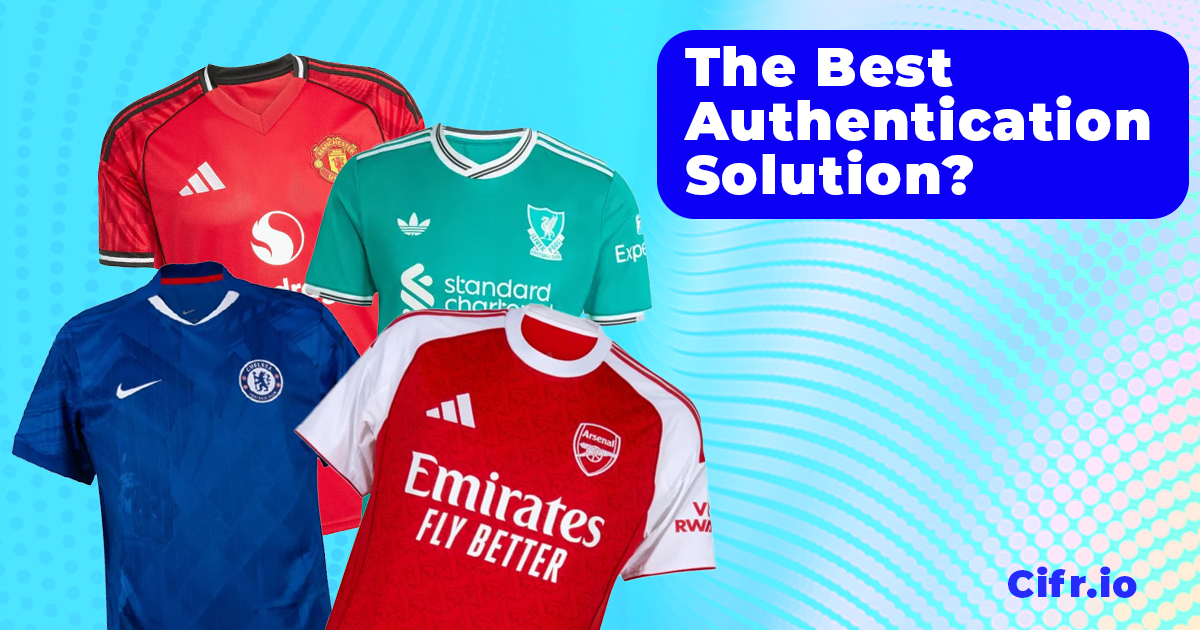
From a Chief Information Security Officer perspective, counterfeiting is no longer a nuisance. It is a strategic threat to brand equity and supply-chain integrity. In sports apparel alone, brands lose roughly 6.5% of annual sales, approximately EUR 500 million, to illicit goods. As manufacturing quality improves, markets are flooded with knock-offs that are virtually indistinguishable.
The result is a vicious cycle: consumers buy a fake, lose trust, and the brand loses long-term loyalty. Static authentication fails because it depends on visual cues rather than cryptographic proof. The industry needs a model that bridges physical products and digital verification, turning each item into a secure node in a trusted ecosystem.
2. Deconstructing Legacy Vulnerabilities: Why QR Codes and Holograms Fail
Security measures live or die based on their barrier to entry. That barrier has collapsed.
| Legacy method | Fatal flaw | Strategic risk |
|---|---|---|
| QR codes / barcodes | Infinite scalability: one code can be cloned millions of times. | High susceptibility to phishing and fake URLs. |
| Holograms | Collapsed cost of entry: $3M machines in the 1980s now cost about $12,000. | Counterfeiters replicate security features cheaply. |
| Standard NFC chips | Simple memory architecture: passive tags store data without active defense. | Data can be intercepted, replayed, and copied. |
The failure of QR-based systems like Certilogo shows the core problem: security is in a static image, not the hardware. Real anti-cloning requires challenging a secure element, not reading a barcode.
3. The Cifr Dual-Layer Security Model: Physical and Digital Convergence
The Physical Layer: Secure Elements
Cifr uses secure elements designed to perform cryptographic operations.
- Hardware-bound private keys are non-exportable.
- The chip signs transactions internally and never exposes secrets.
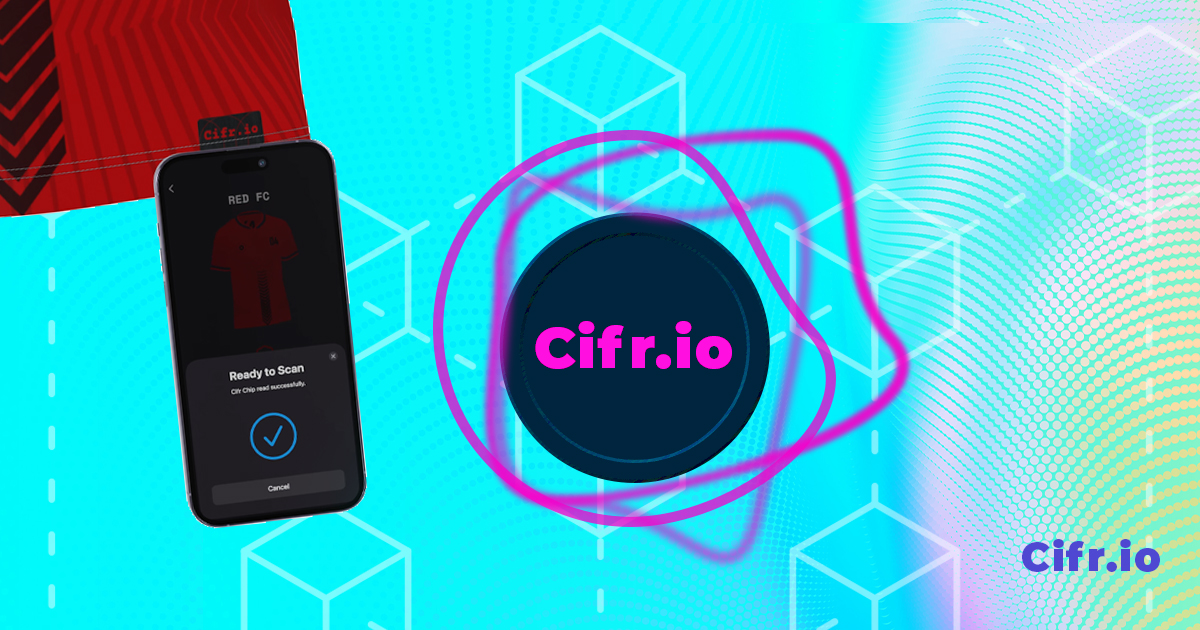
- The chip is an active participant in authentication, not a passive data store.
The Digital Layer: Immutable Ledgers
Cifr anchors every asset to the Solana blockchain.
- A tamper-proof lifecycle record removes the single point of failure.
- The ledger provides transparent provenance across ownership changes.
Strategic note: blockchain is a utility, not a marketing play. It solves provenance and double-spend problems for physical assets with a transparent, immutable history.
4. Technical Specifications: Cifr Max and Cifr X Tiers
Cifr offers two hardware tiers aligned to different threat models.
- Cifr Max (Premium): Lattice-based, anti-quantum cryptography (Falcon and Kyber). This protects against “Harvest Now, Decrypt Later” attacks where adversaries store encrypted data until quantum maturity.
- Cifr X (Standard): Efficient ECC using Ed25519, chosen for strong performance and improved resilience against side-channel attacks compared to secp256k1.
Secure elements require specialized manufacturing and proprietary logic. Spoofing a Cifr-enabled item requires near-impossible compromise of both hardware and ledger.
5. The Digital Passport: Transforming Products into Interactive Assets
Embedding a secure chip turns a product into a Digital Passport: a verifiable record of provenance, warranty, and service history.
This shifts authentication from a cost center to a revenue driver. Because the ledger is programmable, brands can deliver new utility post-sale. A watch, jersey, or collectible becomes a lifestyle pass that unlocks exclusive content, rewards, and membership benefits. Authenticity becomes an access layer.
6. Industry Applications: Sports, Luxury, and Collectibles
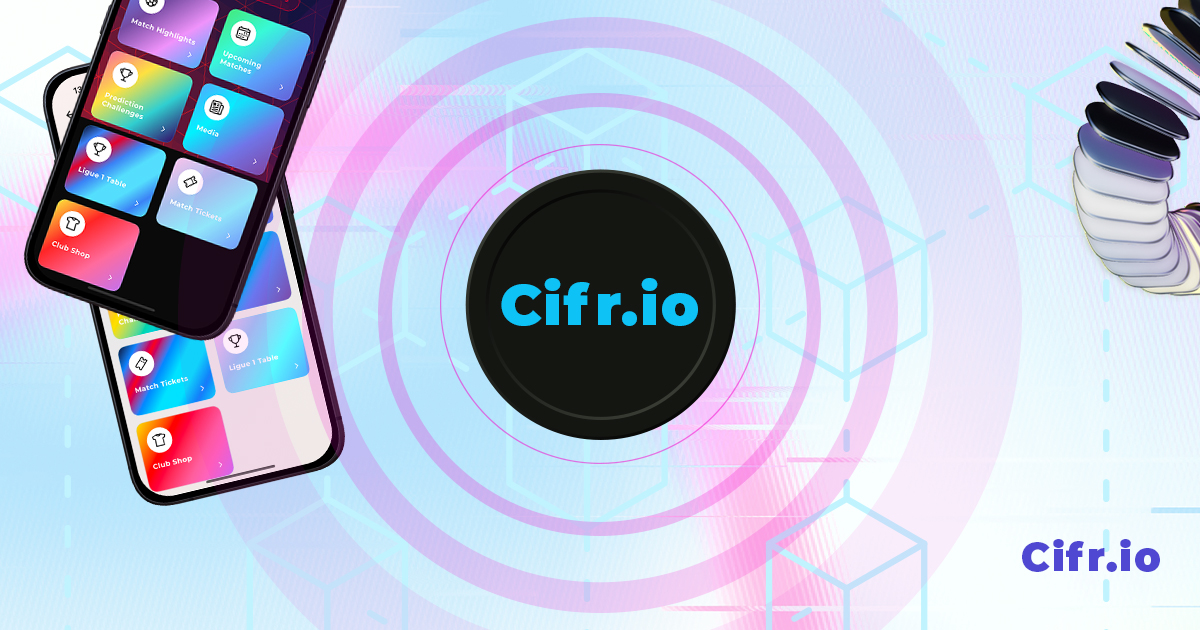
- Sports apparel: Match Meter attendance tracking, stadium perks, and exclusive media access via simple taps.
- Luxury watches: Digital twins replace paper certificates and enable invitation-only brand portals.
- Collectibles: Tamper-proof grading data and digital twins support secure secondary-market trading.
7. The Genesis of Innovation: Bridging Biology and Cryptography
Cifr is rooted in an interdisciplinary foundation that pairs genetic engineering with cryptographic security. DNA is nature’s programming language and a model for unclonable identity. The founder’s research background and cryptography training shaped a philosophy of zero tolerance for error, influenced by milestones like Bitcoin’s decentralized trust model and the Heartbleed vulnerability.
The outcome is a system where secure hardware and immutable ledgers define a new era of brand integrity, binding physical and digital trust into a single, verifiable identity.
For a technical consultation on connected merchandise, visit Cifr.io.
Filed under
- product integrity
- connected merchandise
- secure element
- blockchain
- Solana
- anti-counterfeiting
- digital passport
- brand protection